How clubs and councils can monetise unused land and courts with pickleball, padel and tennis
Most sporting clubs in Australia own an asset they are not being paid for. A typical community tennis facility is busy for competition on Saturday, busy for…
By PIKL Contributer · · 5 min read
Most sporting clubs in Australia own an asset they are not being paid for.
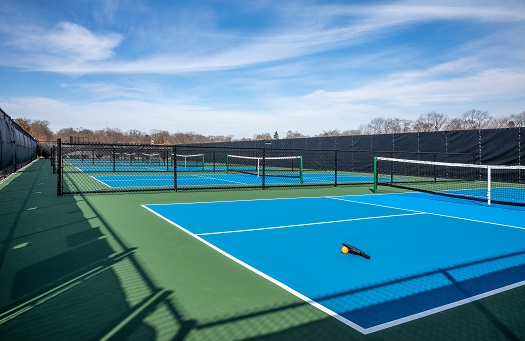
A typical community tennis facility is busy for competition on Saturday, busy for coaching after school, and close to empty for a large share of the remaining hours. The courts are built, lit, fenced, insured and maintained around the clock. For most of that clock, they earn nothing.
The same arithmetic applies to a bowls club with a green it no longer fills, a golf club with land doing nothing in particular, and a licensed club with space behind the car park. Rates, maintenance and insurance get paid on all of it. Very little of it brings money back in.
What has changed is that there is now a straightforward way to monetise that space — and it does not require giving up a single hour of what the club already does.
Two sports arrived at the right moment
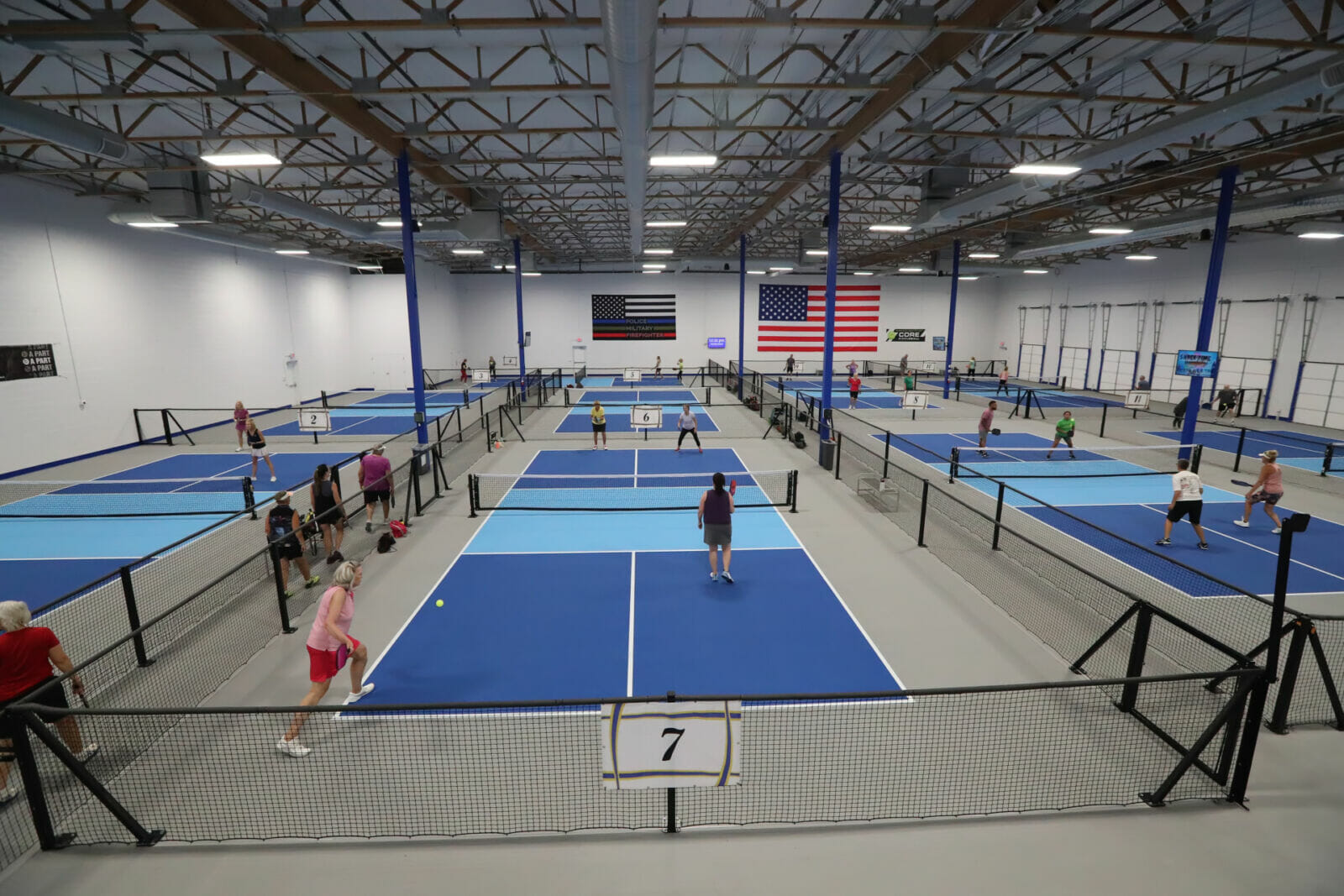
Pickleball has been the fastest-growing racquet sport in Australia for several years, and the reasons are structural rather than faddish. The court is roughly a third the size of a tennis court, so four fit in the footprint of one — four income streams where there was one. The serve is underhand and the ball is slow, which means a complete beginner can rally in their first ten minutes, and a 68-year-old can play three times a week without wrecking their shoulder. It is played as doubles by default, so it is social by design.
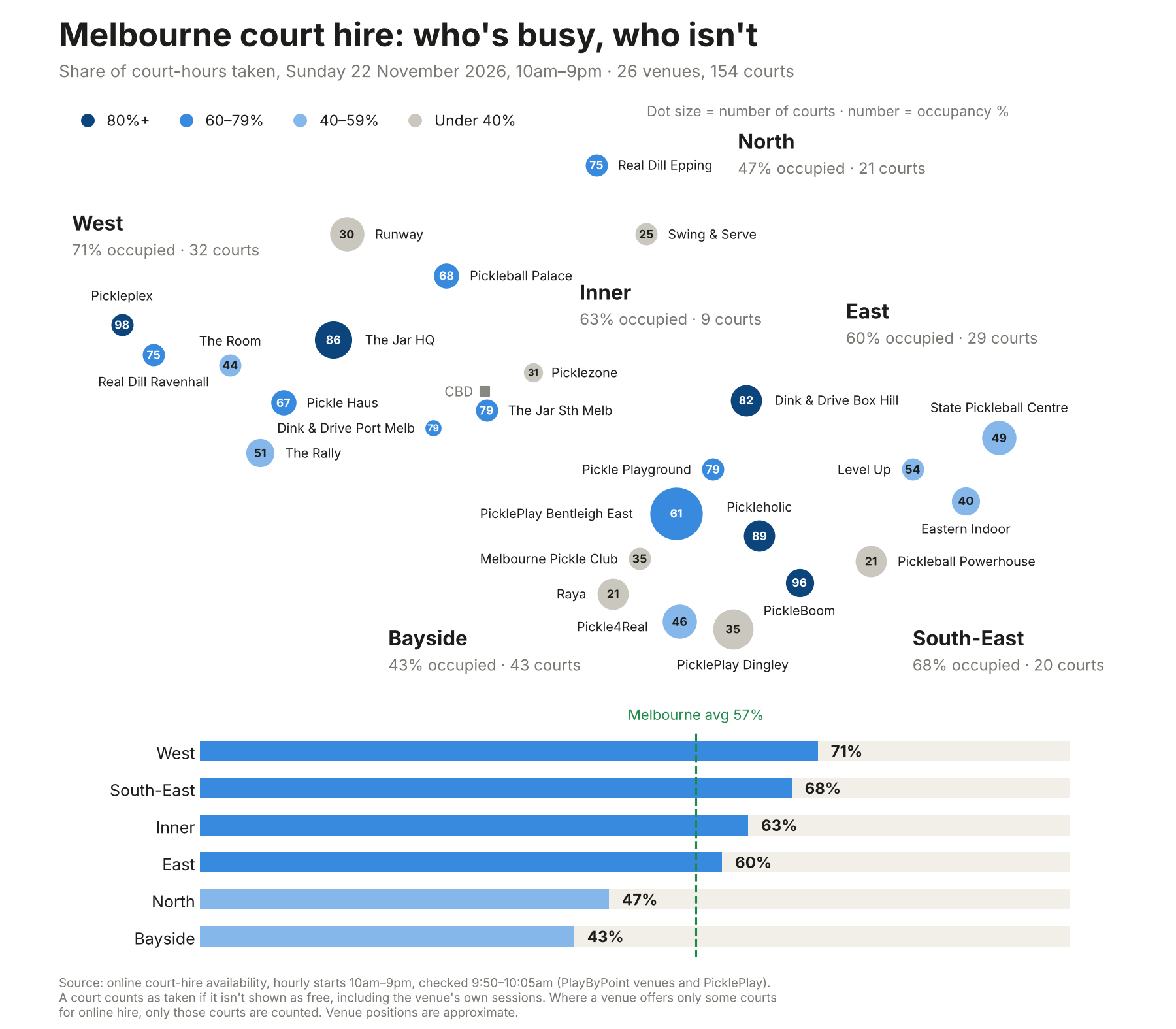
For a club, that combination translates into something specific: a sport that fills weekday mornings, appeals to the demographic most likely to join and spend at the bar afterwards, and needs no new land if there are tennis courts already there.
Padel is the other half of the equation and behaves quite differently. It is a premium, enclosed, glass-walled format with strong court-hire demand and a younger, higher-spending player base. Where pickleball fills quiet hours cheaply, padel generates revenue per court-hour that tennis struggles to match — at a meaningfully higher build cost.
Most clubs considering either sport end up asking the same question, and it is the right one: which of these actually suits our site, our community and our balance sheet?
The gap in the market is not courts — it's operators
Here is the problem clubs run into. Court builders build courts. Coaches run programs. Neither is set up to tell a committee whether a project stacks up, model the revenue, structure a lease, respond to a council tender, and then actually run the place afterwards.
So clubs either do nothing, or they build something on instinct and hope someone turns up.
Racquet Partners is one of the businesses that has grown into that gap. It works exclusively with the people who own the courts — councils, tennis clubs, bowls clubs, golf and licensed clubs, country clubs and resorts — and it covers pickleball, padel and tennis under one team rather than pushing a single sport.
That multi-sport position matters more than it sounds. A club approached by a padel company gets a padel proposal. A club approached by a pickleball operator gets pickleball. An operator carrying all three has no particular reason to recommend one over another, which makes the advice considerably more useful to a committee trying to decide.
Four ways in, depending on appetite
The business is structured so that clubs can take as much or as little as they want.
Consult. Independent advice before committing — feasibility, demand, sport mix, court layout, financial modelling, and support with grant applications and tender responses. For most clubs this is where the conversation starts.
Build and launch. Delivery of the courts themselves, whether that is a new build, a conversion or line-marking, plus the launch programs, coaching, booking systems and marketing needed to open with players rather than empty courts.
Manage. The club keeps the asset; the operator runs the day-to-day to agreed targets — bookings, staffing, coaching, social play, leagues, events, membership growth and reporting back to the committee.
Lease and operate. The turnkey version, where the operator takes on the venue under a lease, licence or management agreement, funds and delivers the capital works, and runs everything as one accountable party.
Running underneath all four is the thing clubs do not see on a proposal: a supplier network. Padel court construction, pickleball builds and court conversions, tennis court resurfacing, booking systems, club management software, keyless access control for 24/7 court hire, equipment vending, lighting and fencing. For a volunteer committee, having one point of contact across all of that is worth as much as the strategy.
Clubs are not being asked to give anything up
The objection that kills most of these projects is predictable and reasonable: are we losing courts?
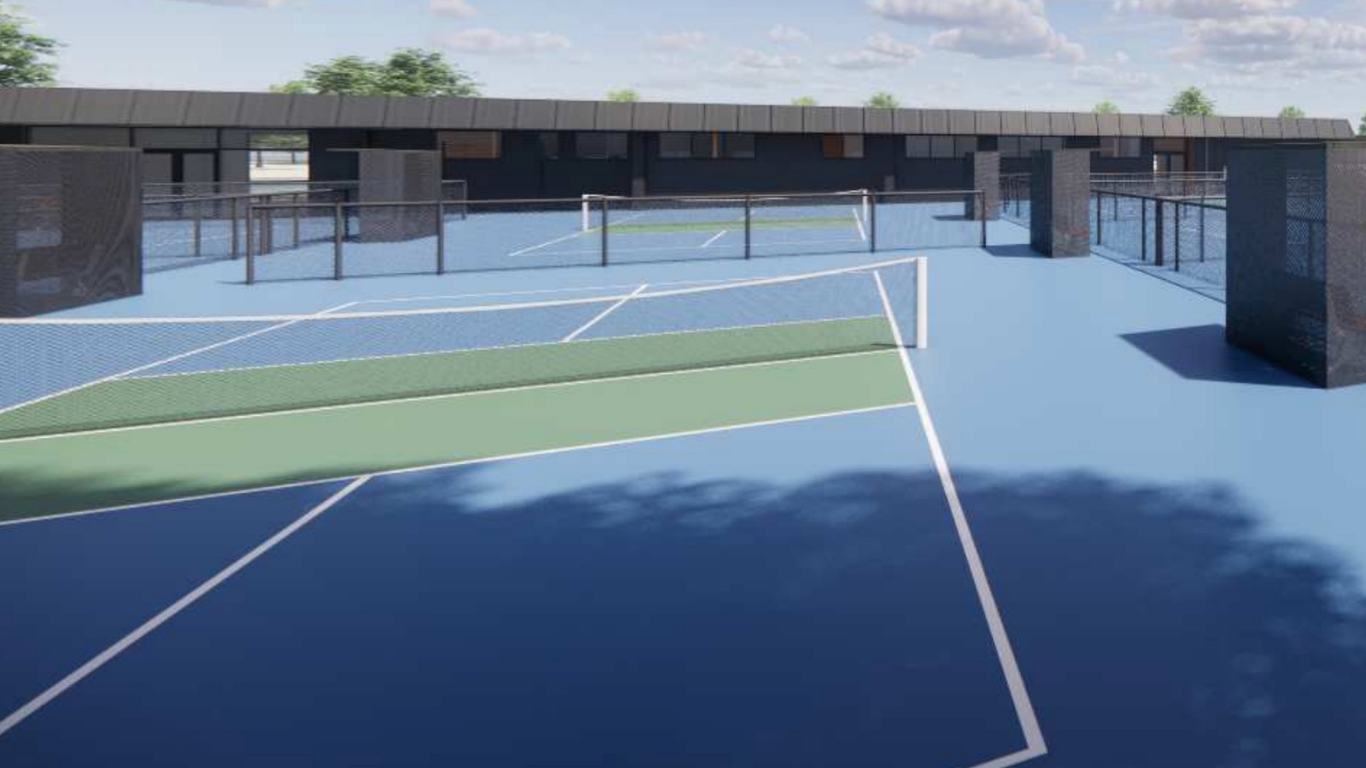
The honest answer, in a well-designed project, is no. Pickleball and padel go into the hours and the space tennis is not using. Lines get added rather than replaced. Greens and vacant land get built on rather than existing courts being taken away.
That is also why tennis centre management sits alongside the newer sports rather than behind them. Councils putting a community tennis centre out to tender want an operator who will run proper tennis — coaching programs, competitions, pathways, court maintenance — and who can lift utilisation by adding other sports where they genuinely fit. Not one who sees the tennis as an inconvenience.
Operators, not consultants
The most useful filter a club can apply to anyone pitching this is simple: have you actually run a venue?
Racquet Partners operates Pickle Park Caulfield, a seven-court pickleball venue at Caulfield Park Sports Club — a site that was underused space before the courts went in. It has also worked with Glen Eira City Council, Beaumaris Lawn Tennis Club and Southern Basketball Association to introduce pickleball to existing facilities.
That matters because advice from someone who has met a Tuesday morning roster, a booking system outage and a membership renewal cycle is different from advice assembled in a spreadsheet. A feasibility study that says a venue will do a certain number of court hours per week is a guess unless the person writing it has watched a real venue do them.
Where to start
If you are on a committee, the useful first step is not choosing a sport. It is working out what the space needs to return — court hire income, new memberships, program and event revenue, more bar and kitchen trade, a stronger tender response — and then modelling the venue around that number.
The clubs that move early on this tend to get the local market to themselves. In most suburbs there is room for one busy multi-sport racquet venue and not much appetite for a second.
Racquet Partners can be reached at racquetpartners.com.au.
- venues
- councils
- clubs
- padel
- court construction
- venue management
- business