Can Pickleball Franchises Succeed in Australia? A Real Analysis
Why Pickleball Franchises Won’t Translate to Australia (Yet) Pickleball franchises are booming in the United States. Capital is flowing. Venues…
By PIKL Australia · · 3 min read
Why Pickleball Franchises Won’t Translate to Australia (Yet)
Pickleball franchises are booming in the United States.
Capital is flowing. Venues are scaling. Multi-site rollouts are accelerating.
It looks like a model ready to export.
But what’s working in the U.S. doesn’t automatically work in Australia—and right now, that gap is being underestimated.
The U.S. Model: Built on Scale
The American pickleball boom has reached a point where franchising makes sense.
Large populations, dense cities, and a rapidly expanding player base have created:
- High daily court utilisation
- Strong membership uptake
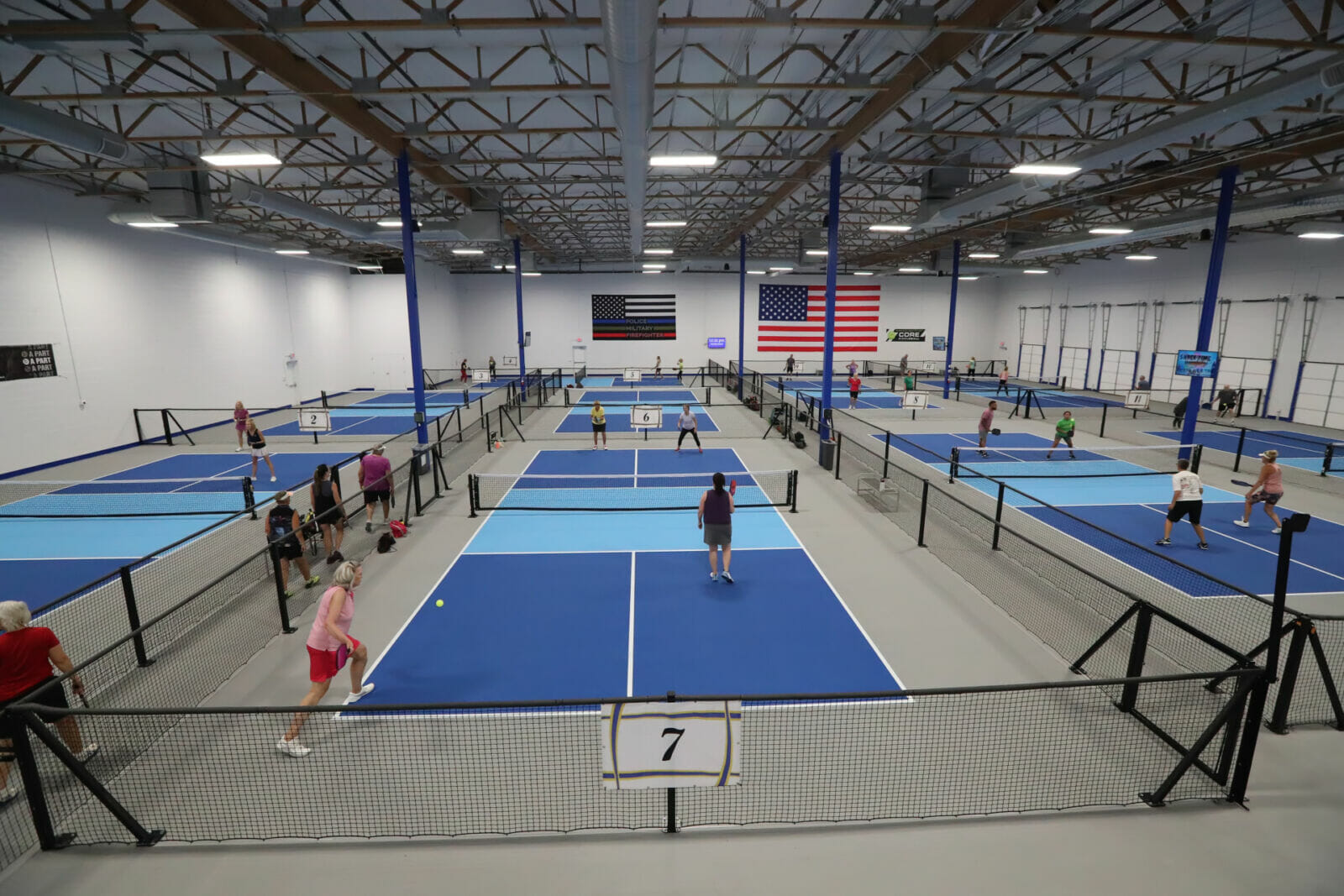
- Demand for premium indoor facilities
This is what franchising needs:
- Repeatability
- Consistent demand
- Scalable economics
In many U.S. cities, one suburb can support what would be an entire metropolitan footprint in Australia.
Australia: A Smaller, More Fragmented Market
Pickleball is growing quickly in Australia—but the structure is different.
Participation is rising, venues are increasing, and awareness is building. But:
- The total player base remains relatively small
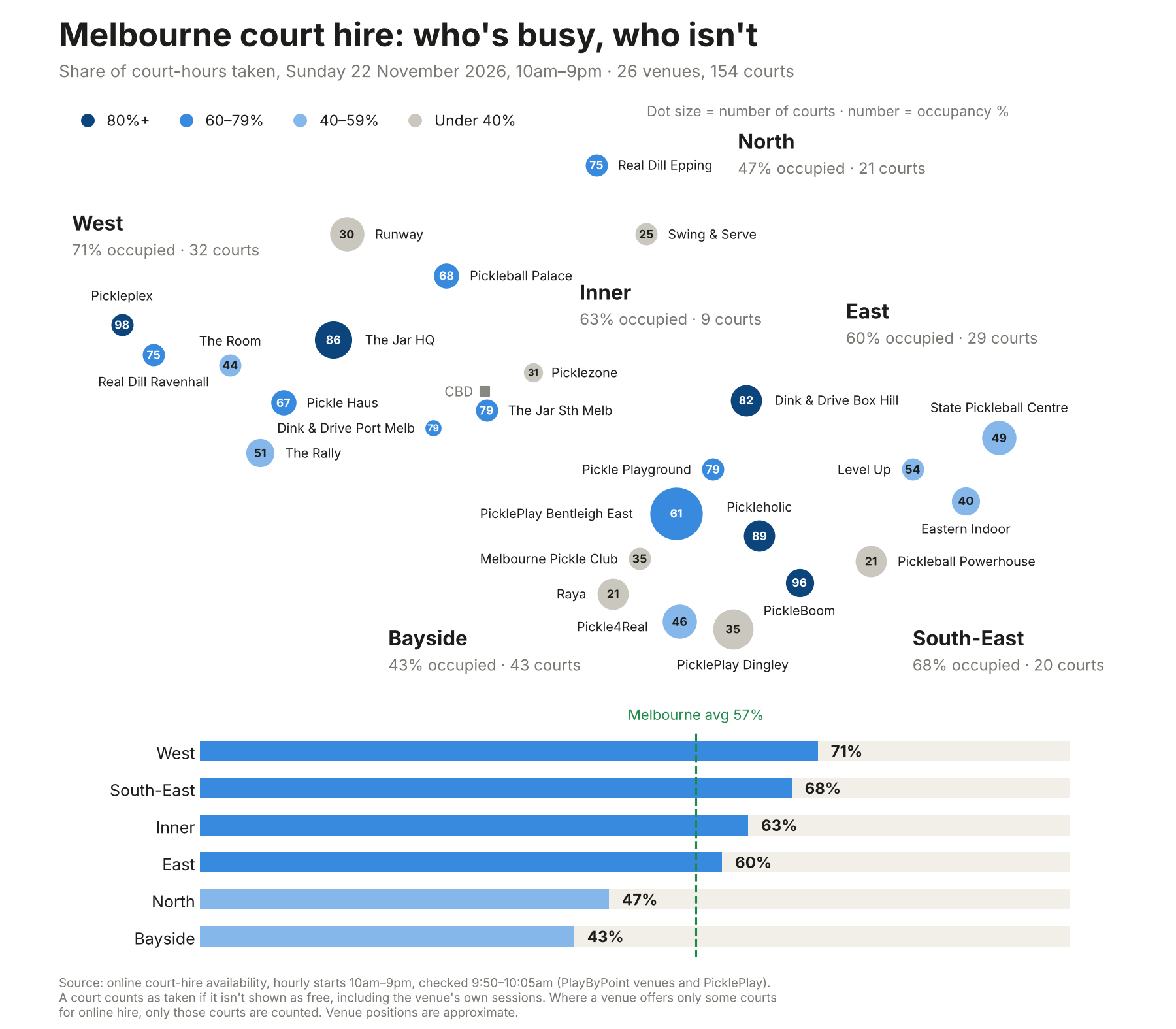
- Demand is spread across fewer, less dense cities
- Growth is heavily community-driven
Most importantly, pickleball here has not grown out of commercial facilities.
It has grown through:
- Tennis clubs adding lines
- Bowls clubs looking to activate space
- Community-led social sessions
That foundation matters. It shapes how the sport behaves commercially.
The Franchise Problem
Franchise models rely on consistency.
Same build. Same pricing. Same utilisation assumptions.
That’s where things start to break down locally.
1. Density Isn’t There
In the U.S., multiple venues can operate within a tight radius and still fill courts.
In Australia, most cities can realistically support:
- One strong indoor venue
- A network of smaller community-based locations
Trying to replicate a multi-site franchise rollout quickly runs into demand limits.
2. The Customer Behaves Differently
Australian pickleball is still largely:
- Social
- Casual
- Community-driven
Players are used to:
- Low-cost sessions
- Club environments
- Flexible participation
Premium, membership-heavy models—common in U.S. franchises—are less proven locally.
3. Existing Infrastructure Competes Hard
Australia doesn’t need to build all its pickleball venues from scratch.
The courts already exist.
Across the country, there are:
- Tennis centres with spare capacity
- Bowls clubs need revitalisation
- Recreation facilities are underutilised during off-peak hours
These venues offer:
- Lower costs
- Established communities
- Immediate access to players
A new franchise model entering the market often competes against infrastructure that is already paid for.
4. The Economics Are Tighter
Indoor pickleball facilities in Australia face:
- High rent
- Significant fit-out costs
- Limited peak-hour windows
Without strong and consistent utilisation, margins compress quickly.
This is where many “franchise-ready” concepts struggle to hold up under real conditions.
What Actually Works in Australia
The opportunity isn’t in replicating U.S. franchise models.
It’s in adapting to how the Australian market actually behaves.
Operator-Led Models
The most effective venues are being driven by:
- Strong operators
- Smart programming
- Community engagement
Not by standardised franchise templates.
Hybrid Facilities
Successful setups tend to be:
- Part indoor, part outdoor
- Flexible in pricing
- Built around social play as the core driver
Not overbuilt. Not overcapitalised.
Partnerships Over Franchises
Instead of selling franchises, the smarter approach is:
- Partnering with clubs
- Managing existing facilities
- Activating underused spaces
This reduces risk while increasing reach.
Where Franchises Could Work
There are still pockets of opportunity.
High-density areas in:
- Melbourne
- Sydney
- Brisbane
may support premium, multi-court indoor facilities.
But even in these markets, success will depend less on the franchise model—and more on execution.
The Bigger Picture
Franchising works best in mature, standardised industries.
The fitness industry is a clear example, with structured ecosystems and established pathways. Platforms like
Fitness Franchise Opportunities Australia
highlight how developed that model has become locally.
Pickleball in Australia isn’t there yet.
It’s still being shaped.
Final Word
Pickleball franchising in Australia isn’t a copy-and-paste opportunity.
It’s a localisation challenge.
The operators who succeed won’t be the ones who scale fastest—they’ll be the ones who:
- Understand utilisation
- Work within existing ecosystems
- Build community before infrastructure
The model will come.
But it won’t look like the U.S.
PIKL Insight
- Australia doesn’t have a supply problem—it has a utilisation problem
- Community-led venues will outperform purely commercial rollouts
- The next phase of growth will be driven by operators, not franchises